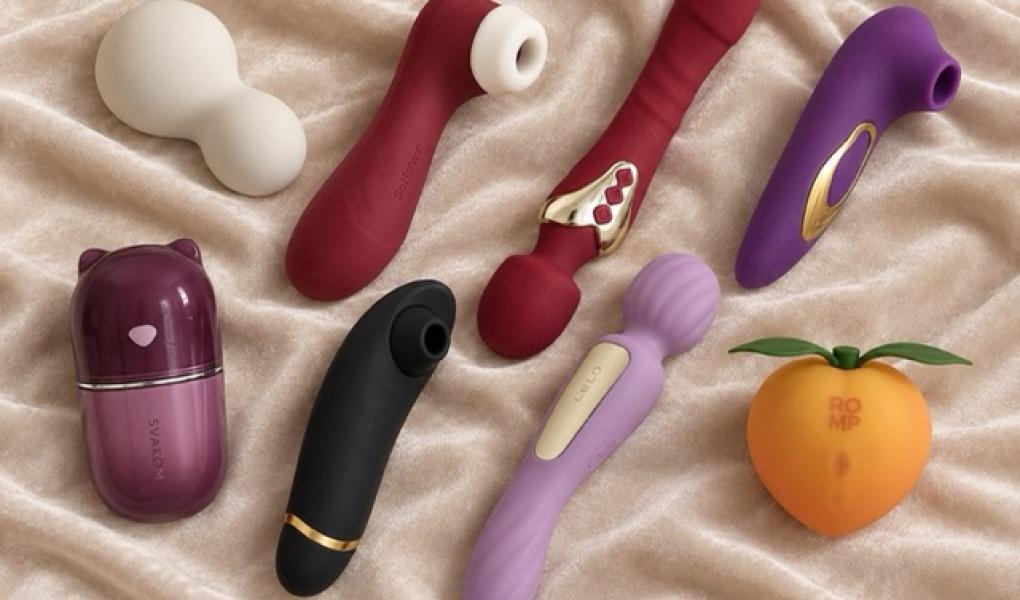
By their very nature, sex toys often come into contact with the most sensitive parts of the body. It is therefore important that the materials do not contain unwanted substances at harmful levels. At the same time, the products should of course be comfortable, easy to use and, above all, deliver the pleasure they promise.
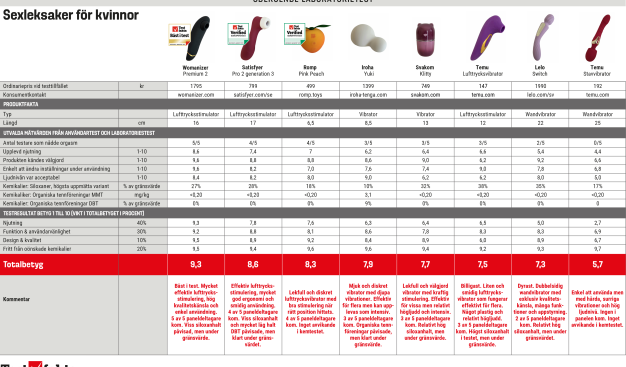
Testfakta has compared eight sex toys for women, ranging from budget products to advanced models. The test was conducted in two parts: a chemical laboratory analysis and a user test in which five women evaluated all the products over approximately six weeks.
Chemicals in all products – but no limits exceeded
The chemical analysis was organised and quality-assured by Measurlabs in Finland. The laboratory examined aromatic amines, organotin compounds and siloxanes in the parts of the products that come into contact with the body's mucous membranes.
– These substances can be found in dyes, plastics and silicone materials, and some of them are associated with health or environmental risks, says Pasi Tuomikoski at Measurlabs.
Overall, the results are reassuring. None of the tested products was considered to exceed any applicable limits under the EU's REACH chemicals legislation.
No aromatic amines were detected, but all products contained several types of siloxanes. The limit is 1,000 mg/kg for several of the different siloxane types, and the products therefore ranged from 9.7% to 37.6% of the respective limits. The highest level was found in Temu's air-pressure vibrator, at 37.6% of the limit.
The laboratory also analysed organotin compounds. In six of the eight products, the concentrations were below the measurable limit. In Satisfyer Pro 2, a very low concentration of the compound DBT was detected, corresponding after conversion to approximately 0.02% of the REACH limit. Iroha Yuki stood out with a DBT concentration corresponding to approximately 8.7% of the limit, as well as 3.1 mg/kg of MMT. There is no corresponding REACH limit for MMT.
– Iroha Yuki is a clear outlier compared with the other products, even though the concentration is well below the REACH limit. At the same time, the limit was not specifically developed for products that come into contact with mucous membranes, which can be more sensitive than ordinary skin. We are not aware of any specific limits for this type of use, says Pasi Tuomikoski.
Five women put the products to the test – and the differences are substantial
In the user test, five women tried all eight products over approximately six weeks and assessed, among other things, pleasure, comfort, design, ease of use and noise level.
The panel was also asked to indicate whether they reached orgasm during use. The results reveal substantial differences.
Womanizer achieved the best results
The clear winner is Womanizer Premium 2, which receives an overall score of 9.3 out of 10 and the Testfakta Bäst i test award. The product scores highly for both pleasure and ease of use. All five women reported reaching orgasm with the product, and perceived pleasure received the highest individual score in the test, at 8.6.
But an orgasm within reach does not have to cost a fortune. Satisfyer Pro 2, costing around £60, comes second with an overall score of 8.6 out of 10. Four of the five women reported reaching orgasm. In third place is Romp Pink Peach. It receives an overall score of 8.3 and is particularly appreciated for its playful and discreet design. Here too, four of the five testers reported reaching orgasm. Both Satisfyer Pro 2 and Romp Pink Peach receive the Testfakta Verified award. What the three highest-ranked products have in common is that they all use air-pressure stimulation.
– That result does not surprise me, says Tina Hagelin, founder of the Pistill store.
– Air-pressure technology stimulates the clitoris with pulsating air, usually without direct contact, whereas traditional vibrators provide vibrations through direct touch. Many people experience the stimulation as more enveloping and intense, which can lead to powerful orgasms.
The most expensive is not always the best
The Lelo Switch wand vibrator is the most expensive product in the test, with an approximate price of £150. It receives high scores for design, materials and perceived quality, but lower scores for pleasure itself. Only two of the five testers reported reaching orgasm with it. Svakom Klitty and Iroha Yuki divide the panel. Both are appreciated for their soft materials and well-thought-out design, but the experience of stimulation varies considerably between testers.
The cheapest product surprises – but Temu also has the worst performer
The two cheapest products were both purchased from the online retailer Temu, but their results differ markedly. The small air-pressure vibrator costing around £11 receives relatively good reviews for its simple operation and convenient size. Three of the five women reported reaching orgasm, despite its lower perceived quality.
Temu's dual-motor wand vibrator performed considerably worse, finishing last with an overall score of 5.7. It is criticised for harsh, buzzing vibrations, a high noise level and poor comfort. None of the testers reported reaching orgasm with the product.
– A higher price can mean better materials, more functions and higher quality, but it is no guarantee of greater pleasure. The most important thing is to find a type of stimulation that suits you, says Tina Hagelin.
Pleasure is decisive – but the overall experience matters
The results show that the chemical differences between the products are relatively small, while differences in pleasure, function and comfort are considerably more important. Womanizer Premium 2 is the clear test winner, but Satisfyer Pro 2 generation 3 and Romp Pink Peach show that it is possible to find a well-liked product for considerably less money, and both receive the Testfakta Verified award.