
In the first analysis, a sample of Eldorado Roasted & Salted Peanuts contained aflatoxin B1 at a level several times above the EU maximum. Testfakta informed the retailer, which temporarily stopped the affected batch and initiated additional checks.
Aflatoxins can be very unevenly distributed within a batch. New samples were therefore analysed, and no measurable levels of aflatoxins were detected in the repeat analysis. All products passed the final aflatoxin assessment.
Clear differences in taste
Around 30 participants at the School of Hospitality, Culinary Arts and Meal Science in Grythyttan, Sweden, evaluated the peanuts for taste, texture and appearance.
OLW Klassiska salta jordnötter received the highest overall score and was named Testfakta Best in Test. The sensory evaluation showed considerable differences between the products, with the panel rewarding crunchy, fresh and nutty characteristics, while products further down the ranking were associated with bitterness and cardboard-like flavours.
Sensory quality accounted for 70 percent of the total score, while aflatoxins and fat quality each accounted for 15 percent.
See the full test and results for all 12 products here.
Testfakta tests peanuts – large differences in taste and an unexpected finding of aflatoxin
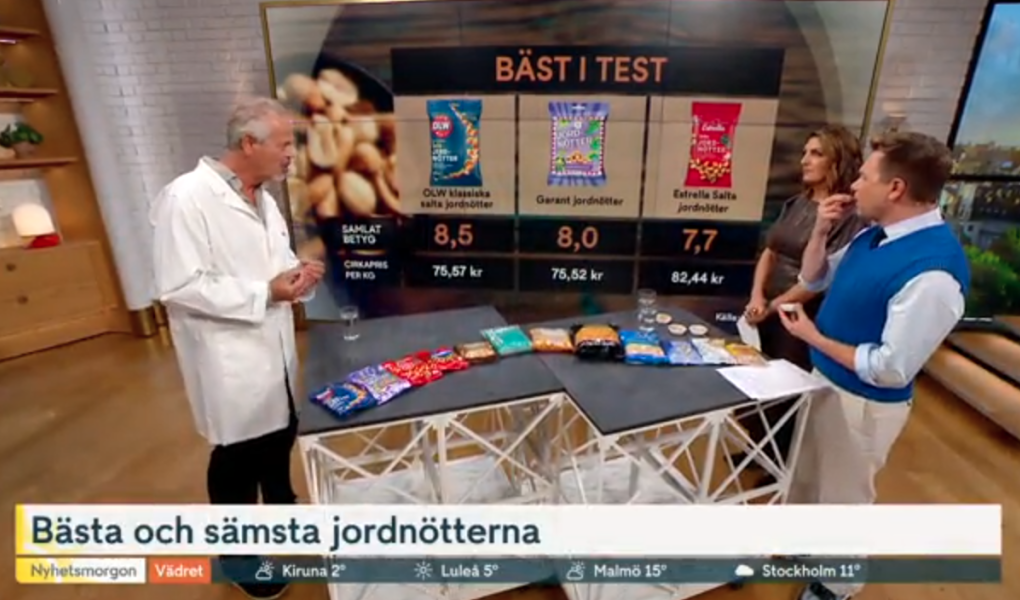
Peanuts. Best in test presentation at TV4 Nyhetsmorgon